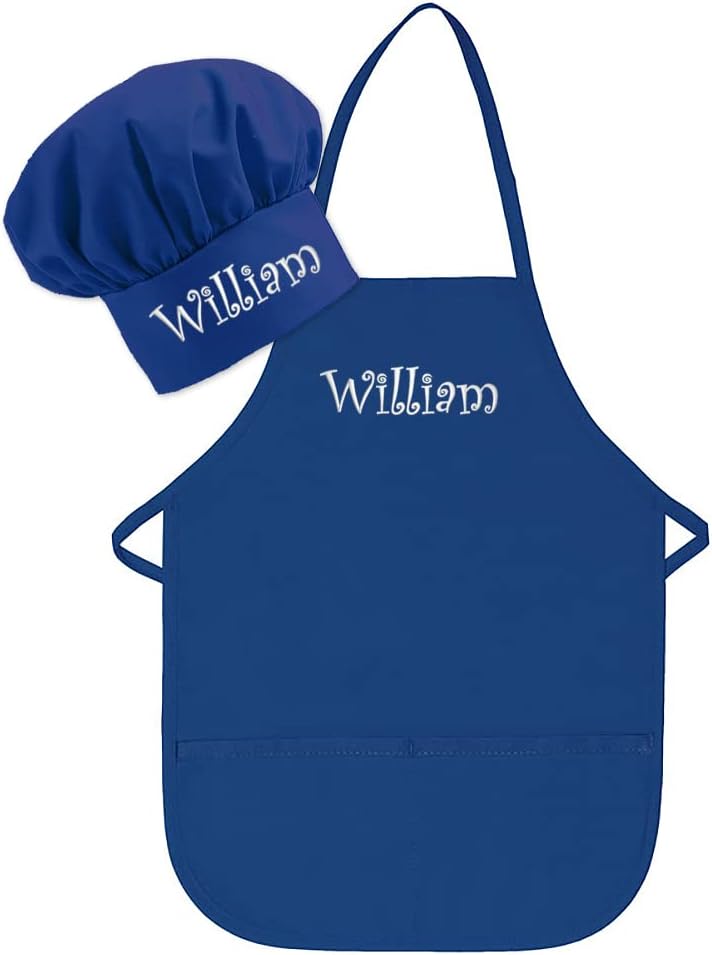
If you’ve ever handed a child a beautifully wrapped baking kit — a cookie cutter set, a rolling pin, a junior spatula — you already know the look on their face when they realize cooking is for them, not just for grown-ups. A personalized apron (that’s an apron with a child’s name, a fun design, or a custom color stitched or printed onto it) takes that feeling one step further. It says: this is your kitchen moment. For parents, grandparents, or anyone shopping for a kid between roughly ages 3 and 14, a personalized apron sits in that sweet spot of practical and memorable — it gets used, it photographs beautifully at birthday parties, and it doesn’t end up in the donation pile by February. This guide will walk you through everything you need to choose one with confidence: which materials actually hold up, what sizing gets right, when personalization is worth the extra cost, and how to pair it with other gifts for a bundle that feels genuinely complete.
Why Personalization Changes the Gift Equation
Here’s the honest version of what’s happening when you give a child a personalized kitchen apron versus a plain one: you’re shifting the item from “tool” to “identity object.” According to Today’s Parent’s editorial feature on cooking with kids and life skills development, children are significantly more likely to engage in repeated kitchen activities when they feel a sense of ownership over the experience — and something as simple as seeing their own name on an apron reinforces that ownership every single time they put it on.
That’s not just feel-good logic. It has a real practical payoff: an apron that gets worn protects clothes, keeps kids comfortable at the counter, and signals to the child that what they’re doing is serious and valued. Parents.com notes in their kitchen activities feature that structured cooking participation — the kind where a child has their own defined role and their own gear — builds follow-through and confidence in ways that casual, unstructured kitchen time often doesn’t.
From a gift-giver’s standpoint, personalization also solves one of the most common gift problems: the sense that you could have just grabbed this off any shelf. A monogrammed or name-embroidered apron cannot be replicated by a last-minute run to a big-box store. That distinction matters, especially in the $30–$80 gift tier where you’re competing with a lot of “nice enough” options.
The Tradeoff You Need to Know Upfront
Personalized means lead time. Most quality personalized aprons — whether embroidered through an Etsy maker, customized via a specialty retailer, or ordered through a brand like Williams Sonoma Kids — require anywhere from 3 to 10 business days of production time before they even ship. If you’re shopping for a birthday in two weeks or a holiday season delivery, build that into your plan. The gift that arrives the day after the party is a much harder sell, even if it’s beautiful.
Material and Build: What Actually Survives the Kitchen
Not all aprons are created equal, and when it comes to kids specifically, the material choice has downstream consequences for parents — namely, laundry.
Cotton canvas and cotton twill are the workhorses of the kids’ apron category. Reviewers across the category consistently report that 100% cotton aprons hold their shape, take embroidery well (which means the personalization stays crisp after repeated washing), and don’t develop the plasticky feel that cheaper blends sometimes acquire after a few cycles. The Spruce Eats’ product guide on kids’ aprons highlights cotton-blend construction as the durability standard to look for in aprons intended for regular use.
Polyester blends are often less expensive and dry faster, but they’re a mixed bag for personalization specifically. Heat-transfer vinyl (the kind of customization that “prints” a name onto fabric) adheres better to synthetic blends — but that method is also more prone to cracking and peeling over time than embroidery is. If longevity matters, embroidery on cotton is the more durable pairing.
Wipe-clean or laminated aprons do exist in the kids’ category and serve a real purpose for very young children (think 3–5 year olds) where speed of cleanup is the priority. But they typically can’t be embroidered — personalization on these usually means a heat-press patch or an iron-on label, which is less permanent. Fine for a toddler, less satisfying as a meaningful gift for a 10-year-old who’s actually learning to cook.
By the Numbers
| Personalization method | Typical durability | Best fabric match | Avg. add-on cost |
|---|---|---|---|
| Embroidery (name/monogram) | 5+ years with normal washing | Cotton canvas or twill | $8–$18 |
| Heat-transfer vinyl (HTV) | 1–3 years before peeling | Polyester blends | $4–$10 |
| Screen-printed design | 2–4 years | Cotton or blend | $3–$8 |
| Iron-on patch/label | 6–18 months | Any | $2–$5 |
Sizing: The Mistake Most Gift-Givers Make
Children’s aprons are typically sized in age ranges — toddler (2–4), small (4–7), medium (6–10), large (9–14) — but those ranges overlap significantly between brands, and they’re not standardized. Good Housekeeping’s Institute review roundup on kids’ aprons flags this as one of the most common points of confusion: a “medium” from one brand fits a 7-year-old comfortably; a “medium” from another is cut for a 10-year-old.
The practical fix: measure the child’s torso length (from shoulder to mid-thigh) and compare it against the specific brand’s size chart rather than trusting the age label. If you’re buying blind — as most gift-givers are — err toward the larger size within the appropriate range. An apron that’s slightly long can have its straps adjusted; an apron that’s too short leaves a child’s clothes unprotected and feels uncomfortable at the counter.
For kids under 5, look specifically for aprons with cross-back straps (straps that cross behind the back and tie at the front) rather than neck loops. Neck loops on toddlers can be uncomfortable and create a fit problem as the child moves around. Cross-back designs sit better on smaller frames and are consistently noted by parents in long-run reviews as the feature that separates “aprons we actually use” from “aprons that got retired after two wears.”
For older kids in the 10–14 range, adjustable neck straps and longer coverage become more important — this is the age group that’s actually working over a hot pan or a stand mixer, and an apron that hits mid-thigh rather than mid-waist gives meaningful protection.
How to Bundle It: Making the Apron the Anchor of a Complete Gift
A personalized apron is genuinely strong on its own as a gift — but it reaches a different level when it’s paired with something that gives the child an immediate reason to put it on. Here’s how other families have built this out across a few budget tiers:
Under $50: A personalized cotton apron ($18–$28) paired with a small baking kit — a set of Tovolo silicone spatulas, or a Nordic Ware mini muffin pan — gives a child everything they need for a first kitchen session. The apron is the personalizing element; the tool is the reason to use it today.
$50–$100: This is the sweet spot for gift-givers who want something that photographs beautifully and feels elevated. A quality embroidered apron paired with an America’s Test Kitchen Kids cookbook (the “Complete Cookbook for Young Chefs” is consistently cited by parents as genuinely usable by kids, not just decorative) creates a gift that communicates: we take your cooking seriously. Reviewers keep coming back to this cookbook specifically because the recipes are written in kid-legible steps rather than condensed adult instructions — the apron and the book together form a complete learning environment.
$100–$150+: For families in the premium segment or for grandparents shopping for a junior chef who has outgrown beginner kits, an embroidered apron anchors a bundle that might include an Opinel Le Petit Chef knife set (designed specifically for children, with a finger-guard system that’s been noted in safety-focused parenting coverage) and a high-quality cutting board sized for a child’s reach. This tier of bundle says: you’re ready for real cooking, and we’ve given you real tools. That message lands differently than any single item could.
If X, Then Y: The Decision Rule for Gift-Givers
After working through the material, sizing, and bundling considerations, here’s the straightforward framework:
If the child is under 6: Prioritize cross-back straps and wipe-clean or easy-wash cotton. Personalization is still lovely but lean toward simpler designs — a first name in a bold font rather than an elaborate embroidered motif that can crack on frequent hot-water washes.
If the child is 6–10 and actively cooking with a parent: This is the core sweet spot. A well-made embroidered cotton apron in a medium size, bundled with a beginner cookbook or a silicone baking tool set, is the highest-confidence gift in the guide. It grows with the child, survives years of washing, and rewards repeated use.
If the child is 10–14 and genuinely skilled: Treat the apron as one component of a real-tools bundle. A longer, adjustable apron in a size that fits their current frame (not what they’ll “grow into”) matters more than the personalization detail — though a name or monogram still elevates the presentation. Pair with a real junior knife set and a cookbook pitched at actual technique, not beginner decoration.
If you’re shopping last-minute: Skip personalization from a specialty maker and look at retailers like Williams Sonoma Kids or Uncommon Goods that carry pre-personalized or quickly customizable options — some offer 2–3 day turnaround. A beautiful apron with a simple, fast monogram service beats a delayed elaborate one every time.
The apron isn’t just wrapping for the other gifts. Done right, it’s the piece that makes a child feel like the cooking is genuinely theirs — and that’s worth getting right.