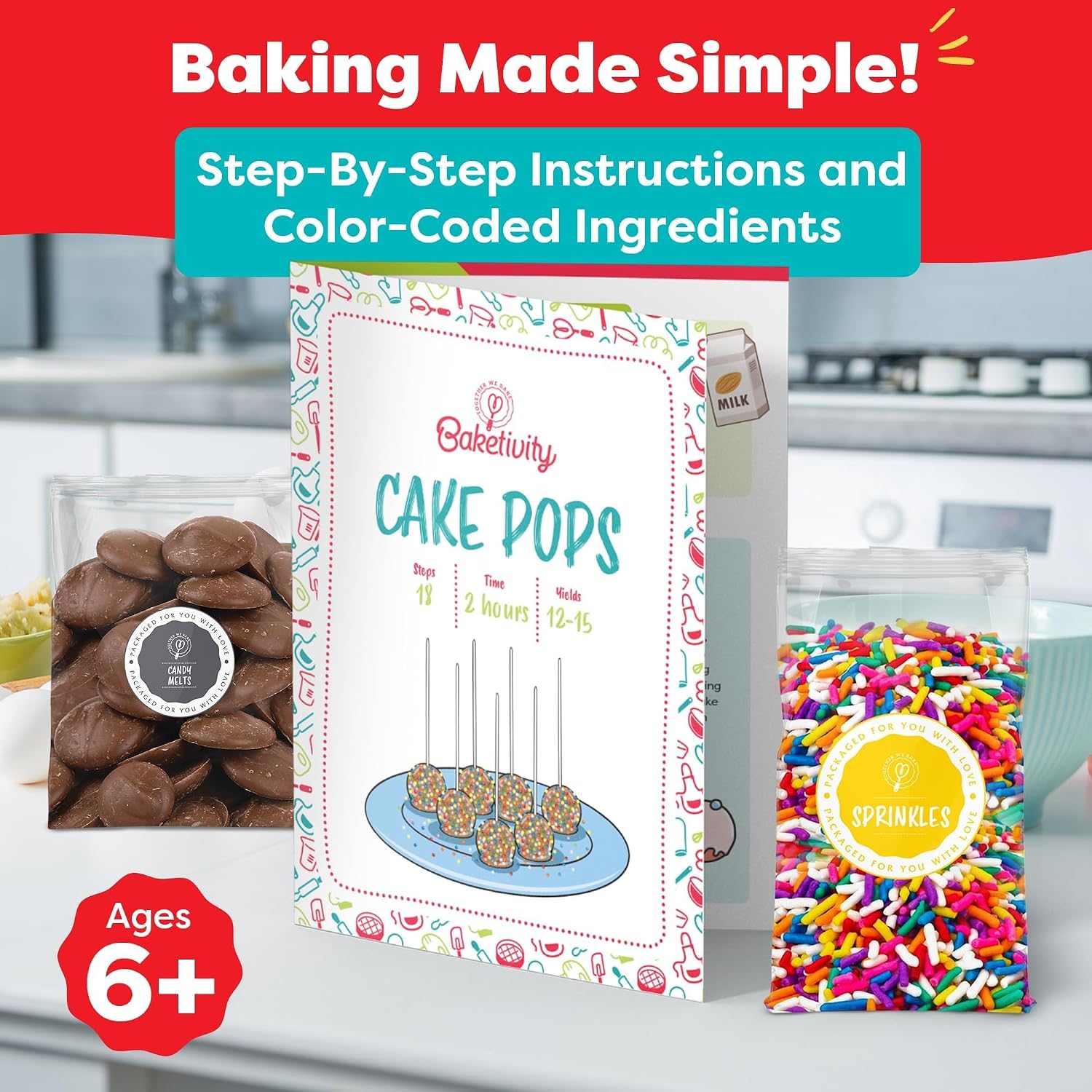
If you’ve ever tried to bake with a five-year-old and ended up with flour on the ceiling and tears before anyone got to lick the spoon, you already know the appeal of pre-measured baking kits. These are boxed sets — available at everything from Target to Williams Sonoma — where someone has already weighed out and packaged every dry ingredient your child will need. Your kid opens the bag, follows the steps, and the main decisions are already made for them. No hunting for the baking powder, no squinting at fractions, no catastrophic double-scoops of salt. The result: a first baking experience that actually feels like a win rather than a cleanup project.
This guide walks you through how these kits work, what separates a forgettable $12 box from something worth gifting, and a clear decision framework so you spend money in the right place for where your kid is right now.
What “Pre-Measured” Actually Means — and Why It Changes Everything
A standard baking recipe asks a beginner to do three hard things at once: read fractions, use measuring tools accurately, and follow a sequence of steps without losing their place. For most kids under eight, that’s genuinely too much cognitive load to handle simultaneously. Something fails — usually the measurement — and the cookies don’t rise, and the child decides they’re “bad at baking.”
Pre-measured kits separate those skills deliberately. The measuring has already happened. Your child’s only job is the sequence: mix this into that, add the wet to the dry, stir until just combined. That’s a real and meaningful set of baking skills — they’re learning to read a recipe, understand the order of operations, and develop feel for texture. They’re just not doing it while also converting ⅔ cup into tablespoons.
Parents.com’s overview of cooking with children notes that kitchen tasks build math reasoning and fine motor skills, but emphasizes that the activities need to be pitched at the right developmental level to generate confidence rather than frustration. Pre-measured kits are essentially a difficulty dial turned to the right setting for a first-timer.
The tradeoff to name plainly: once your kid has nailed two or three of these kits, they may start to plateau. The kits remove friction, but they also remove the skill-building that comes from measuring. If your child is eight or older and already comfortable in the kitchen, a kit without pre-measured ingredients — paired with a solid kids’ cookbook — will teach them more. The kits are an on-ramp, not a permanent state.
By the Numbers
| Price tier | What you typically get | Best for |
|---|---|---|
| $10–$18 | Single recipe, 2–4 servings, basic packaging | First-timers, stocking stuffers |
| $20–$35 | 2–3 recipes, illustrated instructions, sometimes includes a small tool | Birthday gifts, holiday bundles |
| $40–$65 | Multi-session sets, premium packaging, reusable components | Aspirational gifting, dedicated junior bakers |
Good Housekeeping’s 2025 roundup of kids’ baking kits found that the $20–$35 range delivers the best value for most families: enough recipes to build a real habit, without the premium packaging markup you’re mostly paying for at the high end.
What to Look For When You’re Comparing Kits
Once you’ve decided pre-measured is the right starting point, the next question is which kit actually delivers on the promise. Here’s what reviewers and parents consistently flag as the factors that separate good kits from disappointing ones.
Ingredient quality and allergen clarity. The Spruce Eats’ guide to kids’ baking kits points out that many budget kits use low-grade leavening agents and artificial flavors that affect the final result — and a failed bake is a confidence blow for a new kid baker. Look for kits that list recognizable ingredients and clearly label the top eight allergens (milk, eggs, wheat, peanuts, tree nuts, soy, fish, shellfish). Consumer Reports’ food safety guidance for kids in the kitchen recommends checking whether a kit is manufactured in a facility that also processes nuts, even if the recipe itself is nut-free.
Instructions written for the child, not the adult. This is more important than it sounds. Some kits package adult recipe cards with small fonts and assumed knowledge (“fold until just combined” is not a self-evident instruction to a seven-year-old). The best kits — and reviewers at both Good Housekeeping and The Spruce Eats consistently note this — write the steps for the child to read aloud, with visual cues and sensory checkpoints (“the batter should look like thick mud”).
Yield that fits your household. A kit that makes eight cookies is charming for a family of three. It’s frustrating for a kid who wants to bring something to school. Check the yield before you buy, especially if your child is motivated by the social payoff of sharing what they made.
Reusability of any included tools. Kits in the $30–$65 range sometimes include a small whisk, a mini spatula, or a decorating bag. Parents in aggregated reviews consistently note that cheap plastic tools that crack after one use feel like a bait-and-switch. If the kit includes tools, look for silicone or stainless components that reviewers describe as surviving the dishwasher.
Shelf life. Pre-measured kits typically have a 6–18 month shelf life, which makes them genuinely useful as birthday or holiday gifts you can buy ahead. Check the best-by date on any kit you’re purchasing as a gift — some retailers sell older stock at discount.
Kit Tiers: Where to Spend and Where to Save
Here’s the honest breakdown for three types of buyers.
If you’re testing the waters (under $20): You don’t need to invest heavily in a child who hasn’t yet expressed a sustained interest in baking. A single-recipe kit at the $12–$18 price point is a completely reasonable experiment. If it goes well, you’ll know. If it ends in a meltdown and your kid doesn’t touch the kitchen for six months, you haven’t committed real money. Look for kits with a single, forgiving recipe — muffins and quick breads are more tolerant of small errors than cookies or layer cakes.
If this is a gift for someone else’s child ($25–$50): The multi-recipe kits in this range photograph beautifully, which matters for gifting, and they give the child enough material to actually build a habit rather than a one-time experience. America’s Test Kitchen Kids’ published guidance on introducing baking to children emphasizes repetition — doing a recipe twice matters more than doing two different recipes once each. A kit with two or three recipes allows for that repetition. This is also the tier where kits start to come in genuinely giftable packaging.
If your child is already serious (over $50): At this level, you’re often better served by pairing a high-quality kids’ cookbook — the America’s Test Kitchen Kids baking title or a Phaidon children’s cookbook — with a dedicated baking tool (a Nordic Ware half-sheet pan, a Tovolo spatula set) rather than another pre-measured kit. Owners of premium kits in the $50–$80 range consistently report that the appeal is mostly in the unboxing and the packaging, not the baking outcomes. A child who’s ready to actually learn measurement should be measuring.
The Age and Skill Matrix — Your “If X, Then Y” Guide
This is the decision frame that simplifies most of the comparison work.
If your child is 4–6 and has never been in the kitchen: Start with a single-recipe kit under $20 with five steps or fewer. The goal is not a great bake; the goal is a positive first association with the kitchen. Success looks like: they stirred something, something edible came out, they felt proud.
If your child is 6–8 and has done a few baking sessions but still loses focus: The $20–$35 multi-recipe kit range is your target. Look for illustrated step-cards and a recipe that takes under 45 minutes total. Reviewers consistently flag anything over an hour as too long for this age group to maintain engagement.
If your child is 8–10 and has finished a kit or two and wants more: This is the transition moment. Consider pairing a last pre-measured kit — a slightly more complex one, like a layered cake or decorated cookies — with a beginner kids’ cookbook so they can see where the skill goes next. America’s Test Kitchen Kids’ baking resources are particularly well-regarded for this age group because the recipes explain the “why” behind each step, not just the “what.”
If your child is 10–14 and is genuinely into baking: Skip the pre-measured kits entirely. At this level, learning to measure accurately is the skill — and it’s not a hard one. A real cookbook, a decent kitchen scale (a digital scale accurate to one gram costs under $20), and real tools will serve them far better than a kit designed to remove the friction they’re now ready to work through.
If you’re buying as a gift and don’t know the child’s skill level: Default to the $25–$35 range with a forgiving recipe and clear visual instructions. You won’t over-buy for a beginner, and you won’t under-buy for a more experienced kid — a confident young baker can still enjoy a well-designed kit, especially one with a recipe they haven’t tried before.
A Note on What Kits Don’t Teach
It’s worth being clear-eyed here, because the marketing on these kits can overstate the educational component. Pre-measured kits are excellent at building positive associations with baking and teaching recipe-following as a sequenced process. They are not a substitute for learning to measure, understanding why recipes work, or developing real kitchen intuition.
The Spruce Eats’ baking kit guidance notes this explicitly: kits are a confidence-building gateway, not a curriculum. If you want your child to actually understand baking, you’ll eventually need to introduce them to measuring tools, kitchen scales, and recipes where they make the decisions. The kits are where you start — not where you stay.
The good news is that the transition is natural and usually child-led. Most kids who love their first kit will, within a few sessions, start asking “but what if we added more chocolate chips?” That’s your cue. Hand them a measuring spoon and let them figure it out.