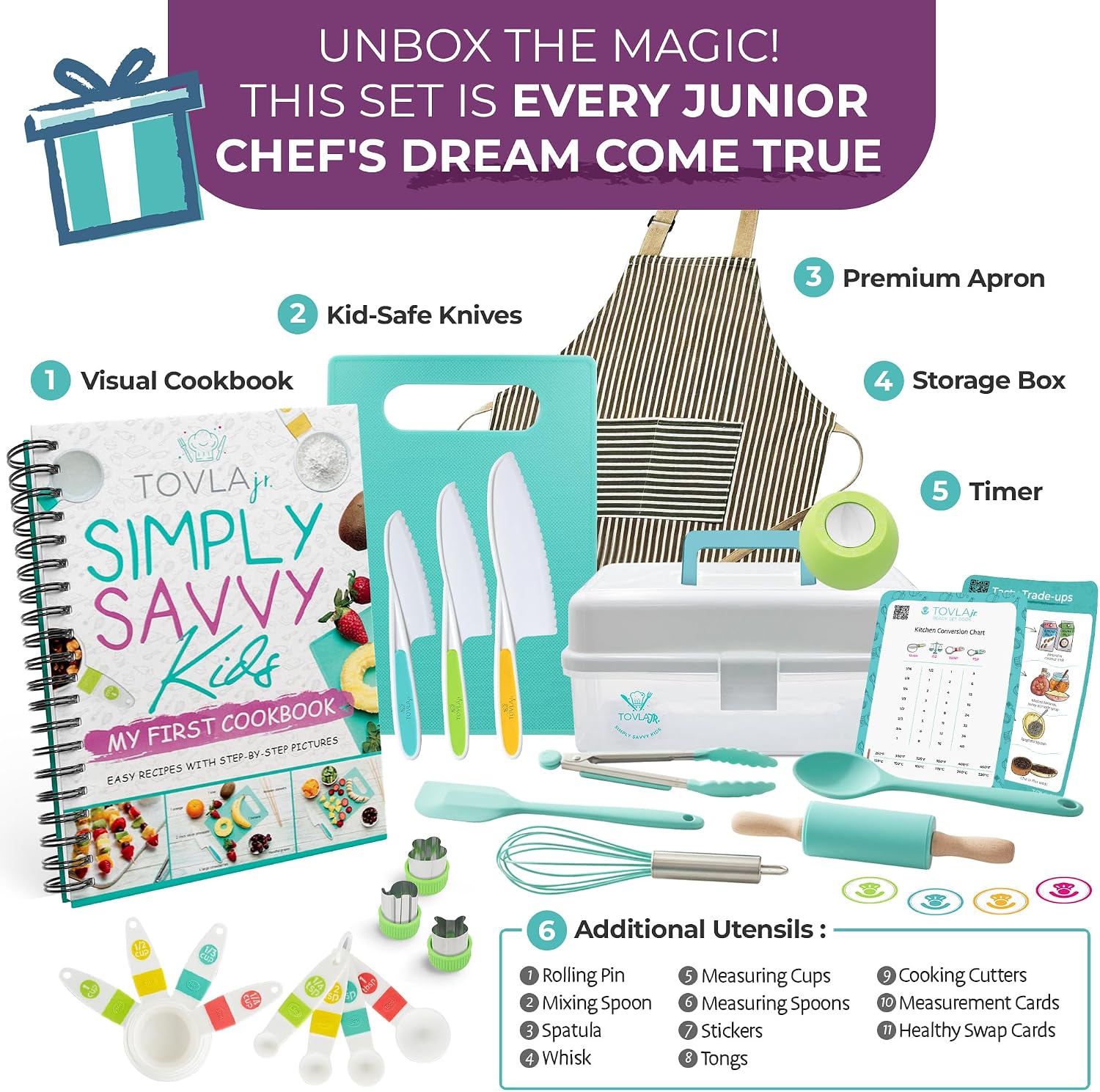
If you’ve ever stood in a kitchen-goods aisle (or stared at an online cart at midnight) wondering whether you’re buying something your kid will actually use or just another gadget that ends up in a drawer, you’re not alone. A kids’ cooking set is exactly what it sounds like: a bundled collection of child-sized kitchen tools — think small whisks, kid-grip spatulas, measuring cups, maybe a cutting board — packaged together so a young cook has everything needed to start a real recipe. These sets matter because cooking is one of those rare activities that builds math skills, fine-motor development, and confidence all at once, according to developmental guidance from the American Academy of Pediatrics. This guide walks through every meaningful price tier, from $15 grab-and-go stocking stuffers to $70 chef kits that feel genuinely special on unwrapping — so you can spend five minutes here and walk away with a clear answer.
Why Budget Brackets Actually Matter Here
This isn’t one of those categories where “just spend a little more and get the good one” is always the right call. A $15 set for a four-year-old who’s never cracked an egg is the smart buy. A $70 knife-and-apron bundle for a twelve-year-old who’s been scaling recipes by eye for two years is also the smart buy. The mistake is mixing up the two.
Here’s a simple framework to keep in your head as you read:
By the numbers:
| Age range | Appropriate tier | What the set should include |
|---|---|---|
| 3–6 years | $15–$25 | Soft tools, nothing sharp, big grips |
| 6–10 years | $25–$45 | Real bakeware, child-safe knives, apron |
| 10–14 years | $45–$70+ | Full knife set, cookbook, real techniques |
Good Housekeeping’s buying guide for kids’ cooking sets notes that age-appropriateness — not brand name — is the single biggest predictor of whether a set actually gets used. The Spruce Eats echoes this in their kids’ cooking gift roundup, flagging that parents consistently return sets that are either too babyish for a curious eight-year-old or too tool-heavy for a preschooler who just wants to stir.
The tradeoff at every tier is roughly the same: lower price = softer materials and fewer pieces; higher price = real tools that last and grow with the kid. Neither is wrong. Both are wrong if misapplied.
The $15–$25 Tier: Stocking Stuffers and First Sparks
This is the impulse-gift zone, and it’s genuinely useful when matched to the right child. Sets in this range typically include a few silicone utensils (spatula, spoon, maybe a whisk), a small cutting board, and sometimes a kid-sized apron. Materials are almost always BPA-free silicone and plastic, which means they’re dishwasher-safe — a real win for parents.
What you’re getting at this price point: entry-level engagement tools, not serious cooking equipment. The grips are oversized and forgiving, the colors are bright, and the goal is to make a three- or four-year-old feel like a real helper without any safety risk. Reviewers at parents.com consistently note that this tier works best as a complement to an adult’s cooking session — the child uses their little whisk to stir, the adult handles the hot pan.
The honest tradeoff: These sets don’t age well. A silicone spatula set that’s perfect for a five-year-old will feel patronizing to an eight-year-old. If your recipient is already comfortable in the kitchen, skip this tier.
If X, then Y: If your kid is under six and has never cooked independently, the $15–$25 tier is the right call. Save the bigger spend for when they’ve shown they want to keep going.
Look for sets that include at least a spatula, a whisk, and a measuring spoon set — those three tools cover the majority of simple baking projects. Silicone starter kits from brands like KidKraft and similar mass-market makers land here; families report they hold up well through the preschool years.
The $25–$45 Tier: The Sweet Spot for Most Gift-Givers
This is where the category gets genuinely interesting, and honestly where most thoughtful gift-givers should land for kids between six and ten. Sets in this range start to include real bakeware — a proper muffin tin, a loaf pan, or a sheet pan scaled down for smaller hands — plus an apron, and often a basic recipe card set or a beginner cookbook.
The Spruce Eats’ roundup of kids’ cooking gifts specifically calls out Nordic Ware’s child-oriented bakeware pieces as a perennial favorite in this range, noting that parents report them holding up through years of actual use, not just play. Nordic Ware is a Minneapolis-based bakeware brand with a long track record in the professional baking world; their kids’ pieces use the same cast aluminum construction as their adult line. That matters because cheap tin bakeware warps in a hot oven — a problem reviewers at Wirecutter flag repeatedly in budget bakeware reviews.
Tovolo is another name that comes up consistently in this tier, particularly for silicone bakeware (think dinosaur-shaped molds, mini bundt pans) that makes baking feel like an event for a seven-year-old. Parents report these are genuinely used, not just admired.
The honest tradeoff: At $25–$45, you’re still mostly in the baking lane. This tier doesn’t typically include real knives or serious cutting tools. If your recipient is an adventurous young cook who wants to make actual dinners — not just cookies — the next tier up is worth the jump.
Gift-wrapping reality check: A Nordic Ware baking set or a Tovolo silicone bundle in this range photographs beautifully and feels substantial on unwrapping. For grandparents or family friends who want something that “looks like a real gift,” this tier delivers.
The $45–$70 Tier: Real Tools for Real Junior Chefs
This is the aspirational tier, and it’s where parents of genuinely skilled young cooks — typically eight to fourteen years old — start to find tools that actually match their kid’s abilities. The defining feature of this price range is the inclusion of real cutting tools: specifically, child-safe knives designed with rounded tips and ergonomic grips, but made from actual stainless steel that can do real kitchen work.
The name that comes up most consistently at this tier is Opinel, a French knife-maker with more than 130 years of history. Their Le Petit Chef set — which typically includes a paring knife, a bread knife, a vegetable peeler, and a finger guard, all sized for children’s hands — retails in the $60–$80 range depending on the retailer. Wirecutter’s gift guides for kids who cook have noted the set as a standout, and across aggregated reviews, the pattern is clear: parents of older, cooking-serious kids treat this as a milestone gift. The knives are real tools, not toys — they require adult supervision and a conversation about knife safety, which is actually part of the point.
What to pair with it: At this tier, a great cookbook transforms a tool set into a complete gift. America’s Test Kitchen Kids publishes an age-differentiated cookbook series (their “The Complete Cookbook for Young Chefs” is the flagship) that parents.com reviewers describe as genuinely usable by kids working independently. Phaidon’s children’s cookbook titles — particularly their illustrated world-cuisine editions — skew slightly older and more adventurous; Good Housekeeping’s gift guides have flagged Phaidon’s kids’ titles as a strong choice for families who travel or eat globally. Either pairs well with an Opinel set as a bundle, and a knife set plus cookbook lands comfortably in the $80–$100 range — a well-justified spend for a birthday or holiday gift.
The honest tradeoff: At this tier, you’re buying tools that require a kid who’s ready for them. Consumer Reports’ overview of kitchen tool safety standards notes that real knives — even child-oriented ones — demand adult instruction and ongoing supervision. This is not a concern unique to Opinel; it’s true of the category. If your recipient hasn’t yet shown consistent kitchen focus and the ability to follow safety instructions, the $25–$45 tier is the better gift — not because this tier is unsafe, but because the tools will go unused.
How to Build a Giftable Bundle Without Overthinking It
The single most common mistake in this category is mixing tiers — pairing a real knife with a preschool-grade apron, or buying a beautiful cookbook for a six-year-old without any tools to go with it. Here’s a simple bundle logic that works at each price point:
Under $25: One solid silicone utensil set + a laminated beginner recipe card set. Total spend: $18–$22. Wrap it in a kitchen towel and it looks intentional.
$35–$50: A Nordic Ware or Tovolo bakeware piece + a child-sized apron + one beginner cookbook. This is the most giftable tier for the $50 budget — it photographs well, it’s complete, and it has a clear “let’s bake together” invitation built in.
$70–$100: An Opinel Le Petit Chef set + an America’s Test Kitchen Kids or Phaidon cookbook + a quality apron. This is the bundle that feels like a meaningful, lasting investment — the kind of thing a parent remembers giving.
The Decision Rule
If you came here with a specific child in mind, here’s the cleanest version of the framework:
- Under six, or first time in the kitchen: $15–$25 silicone starter kit. Don’t overthink it.
- Six to ten, baking-curious: $35–$50 bakeware bundle with a beginner cookbook. This is the sweet spot for most birthday and holiday gifts.
- Ten to fourteen, cooking-serious: $65–$100 real-knife set plus a cookbook. This is a milestone gift — treat it like one.
The goal isn’t to buy the most impressive thing on the shelf. It’s to match the tool to the kid who’s going to use it. Across every budget bracket, the families who report the most satisfaction — per the pattern in Good Housekeeping, The Spruce Eats, and parents.com reviews alike — are the ones who got that match right. The rest is just wrapping.